Cameron Lange · 11 November 2026
Acoustic Sensors Capture Nighttime Wildlife Shifts Along Northern Germany's Coastal Woodland Edges
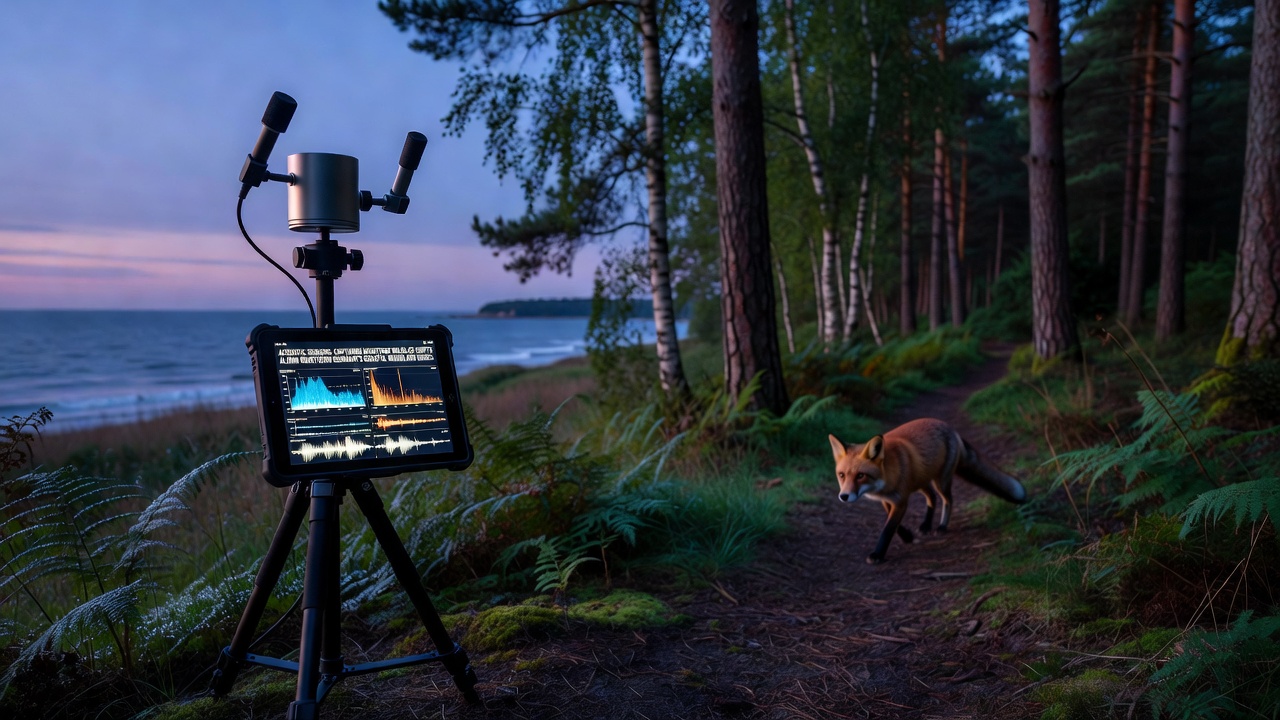
Researchers have deployed networks of acoustic sensors across the coastal woodland boundaries of northern Germany to record and analyze nighttime animal activity, and these devices have documented measurable changes in species presence and vocalization patterns over recent monitoring periods. The equipment captures audio continuously through battery-powered microphones positioned at varying heights and distances from the shoreline, while onboard processing filters out wind and wave noise to isolate biological sounds such as bird calls, bat echolocation, and mammal movements.
Data collected from these arrays show shifts in nocturnal species composition that align with broader environmental variables including tidal fluctuations and seasonal vegetation changes, and analysts process the recordings through machine-learning models trained on regional sound libraries to identify individual species with increasing accuracy. In November 2026 several sensor clusters along the Schleswig-Holstein coast transmitted datasets that indicated earlier onset of certain owl species activity compared with records from five years prior, while overall bat pass rates declined in zones closest to the waterline.
Technology and Deployment Methods
Each sensor unit combines a directional microphone, a solar-rechargeable power supply, and a cellular or LoRaWAN transmitter that uploads compressed audio files to centralized servers every few hours, and field teams calibrate the devices seasonally to maintain consistent detection ranges across different weather conditions. Technicians place units along linear transects that run perpendicular to the woodland edge so that recordings capture both interior forest sounds and those originating from adjacent salt marshes or beaches, which allows comparison of activity gradients within single nights.
Software pipelines convert raw waveforms into spectrograms before applying convolutional neural networks that tag calls to species level, and validation protocols require human reviewers to confirm at least ten percent of automated identifications against reference libraries maintained by German ornithological societies. These combined human and automated workflows have produced time-stamped occurrence data for more than forty nocturnal vertebrate species across multiple study sites, providing a baseline that researchers now use to detect deviations from historical norms.
Observed Patterns in Nighttime Activity
Analysis of multi-year recordings reveals that several passerine species now begin their pre-dawn choruses later in the autumn months than earlier datasets suggested, and this timing shift coincides with prolonged periods of higher soil moisture recorded by co-located environmental probes. Meanwhile certain nocturnal mammals such as pine martens appear more frequently in audio detections at sites where understory vegetation has thickened following reduced grazing pressure, whereas their activity drops in areas experiencing increased storm-driven saltwater intrusion.
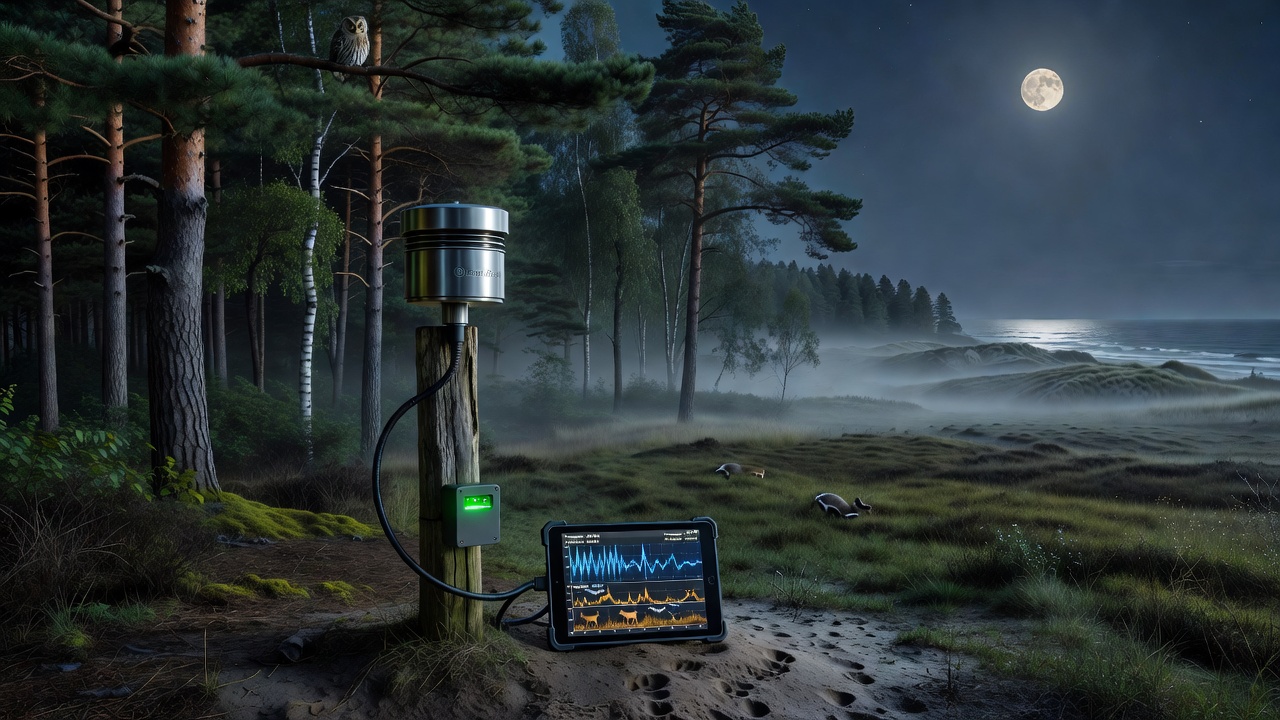
November 2026 datasets further highlighted an uptick in Eurasian woodcock calls along the landward edges of the transects, and researchers attribute this pattern to birds exploiting newly formed wet depressions created by recent storm surges that altered local hydrology without fully inundating the woodland floor. Cross-referencing these acoustic detections with camera-trap imagery from the same locations confirms that the increase in vocalizations corresponds to higher physical presence rather than changes in calling behavior alone.
Integration with Broader Environmental Monitoring
Acoustic findings integrate with sediment core analyses and tide-gauge records to build composite pictures of how coastal woodlands respond to cumulative pressures, and joint datasets indicate that zones experiencing faster rates of relative sea-level rise also host reduced diversity in nocturnal soundscapes. Collaborative projects between regional universities and federal agencies have standardized metadata formats so that acoustic outputs feed directly into national biodiversity reporting systems, and this linkage enables rapid comparison against parallel monitoring efforts conducted along the Baltic and North Sea coasts.
One long-term study coordinated through institutions in Lower Saxony has paired acoustic arrays with soil-moisture sensors to examine whether drier interior woodland patches support different bat communities than the more humid boundary zones, and preliminary outputs suggest that edge habitats continue to function as important foraging corridors even as overall species richness fluctuates year to year. Such integrated approaches help separate localized behavioral adjustments from larger population-level trends that may require conservation intervention.
Conclusion
Continued operation of these acoustic networks supplies verifiable, time-resolved records of how nighttime wildlife communities along northern Germany's coastal woodland edges respond to ongoing environmental change, and the resulting datasets support evidence-based management decisions at both local and national scales. Ongoing refinements in sensor durability and analytical precision promise even finer resolution in future seasons, allowing researchers to track subtle shifts that might otherwise remain undetected until they become pronounced.