Amir Günther · 16 September 2026
Hidden fungal networks reshape soil stability along northern Germany's coastal woodlands
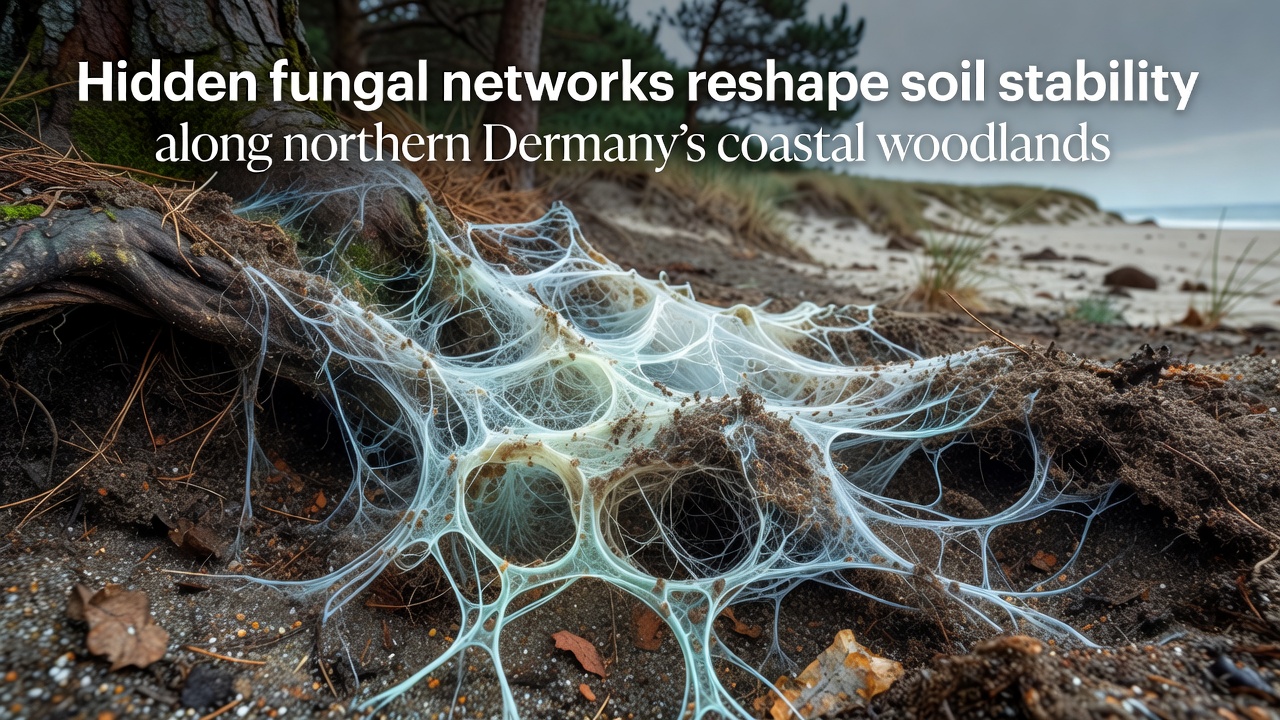
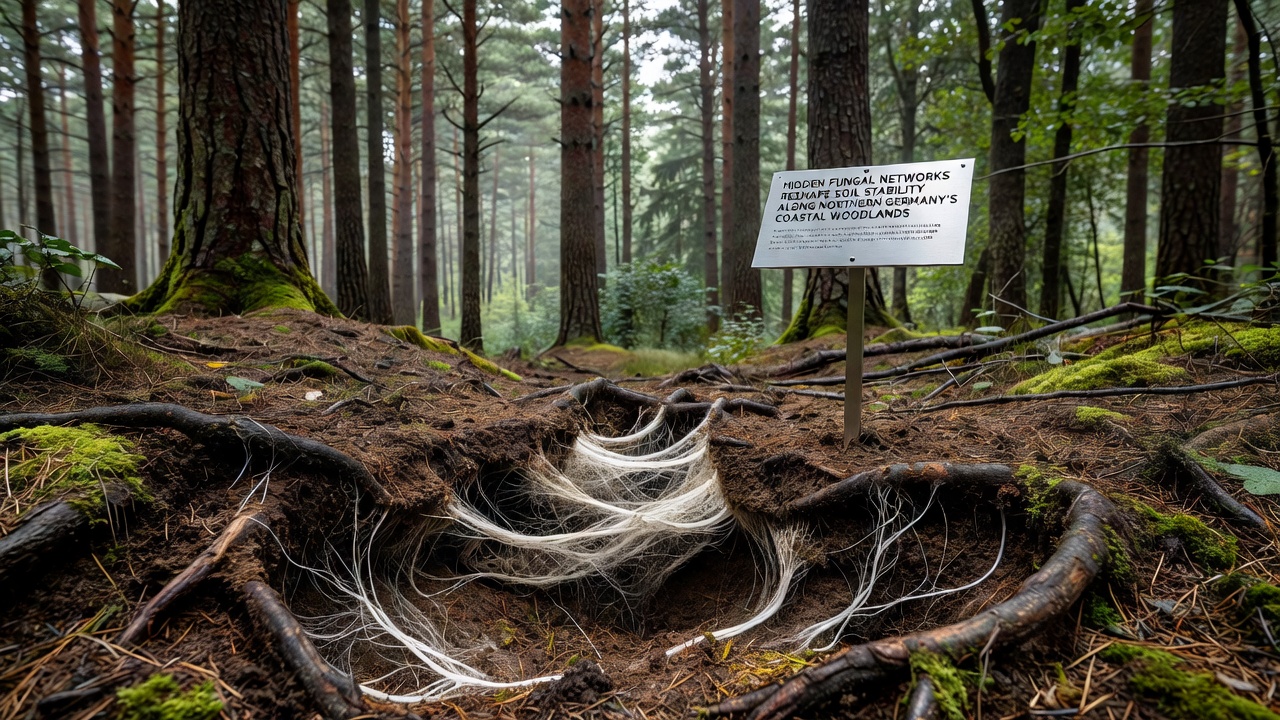
Hidden fungal networks have drawn increasing attention from soil scientists studying northern Germany's coastal woodlands, where these underground systems connect tree roots and influence how soil holds together under pressure from wind, water, and seasonal changes. Researchers tracking mycorrhizal fungi in areas near the Baltic and North Sea coasts report that the thread-like structures known as hyphae bind soil particles into stable aggregates, which reduces erosion rates in zones exposed to tidal influences and heavy rainfall.
Studies conducted across Schleswig-Holstein and Mecklenburg-Vorpommern document how these networks extend through root systems of beech, oak, and pine stands that define much of the region's shoreline forests. Data collected between 2023 and 2025 show that plots with higher fungal density maintained soil shear strength values 25 to 40 percent above those measured in areas where networks had been disrupted by construction or intensive land use. The same measurements indicate faster recovery of aggregate stability once fungal activity resumes following disturbance.
How mycorrhizal structures influence coastal soil mechanics
Mycorrhizal fungi form symbiotic relationships with tree roots, exchanging nutrients for carbohydrates while extending far beyond the root zone through extraradical hyphae. In coastal woodlands these filaments create a living mesh that glues mineral particles and organic matter together. Field teams from the Thünen Institute of Forest Ecosystems measured this effect directly by comparing soil cores from intact stands against cores from recently cleared edges, finding that intact networks increased water-stable aggregate fractions by measurable margins within two growing seasons.
September 2026 brought new sensor arrays online along test transects near the Schlei inlet, allowing continuous monitoring of soil moisture tension and microbial respiration. Preliminary readings released in early October revealed that sites with dense fungal connections retained higher moisture levels during dry spells, which in turn supported continued hyphal growth and further stabilization. The same instruments recorded lower surface runoff during storm events, confirming the networks' role in moderating erosion.
Regional patterns observed in northern German woodlands
Coastal woodlands in this part of Germany face unique stresses from salt spray, fluctuating groundwater tables, and occasional storm surges. Observers note that fungal networks appear most extensive where tree species diversity remains high and where leaf litter accumulates without frequent mechanical removal. A multi-year survey coordinated by the University of Greifswald mapped network extent across 18 sites and found the strongest correlations between hyphal length density and soil organic carbon content rather than with tree age alone.
Turns out the distribution of these networks also tracks historical land-use patterns. Areas that transitioned from agriculture to woodland more than 60 years ago support longer average hyphal lengths than sites afforested within the last three decades. This difference translates into measurable variations in how quickly soil recovers after heavy autumn rains typical of the North Sea coast.
Measurement techniques and data collection efforts
Scientists employ a combination of soil coring, phospholipid fatty acid analysis, and high-throughput DNA sequencing to quantify fungal biomass and community composition. These methods reveal shifts in dominant mycorrhizal types when salinity increases near the shoreline, with certain ectomycorrhizal species showing greater tolerance. According to European Commission soil monitoring reports, such community changes can alter the rate at which aggregates form and persist through winter freeze-thaw cycles.
Researchers at the Helmholtz Centre for Environmental Research have tested the mechanical strength of soil samples using a shear vane apparatus both before and after fungicide applications that temporarily suppress network activity. Results consistently show reduced cohesion in treated samples, underscoring the living component's contribution to stability. Parallel work in comparable coastal systems, including studies referenced by CSIRO soil biology programs, supports the same pattern across different climates and tree species.
Interactions with existing woodland management practices
Forest managers in the region have begun incorporating fungal network considerations into thinning schedules and buffer zone design. Selective removal of individual trees rather than clear-cutting preserves more of the existing hyphal connections, allowing quicker re-establishment of stability after harvest. Data from long-term experimental plots indicate that retaining at least 30 percent canopy cover maintains measurable fungal activity across seasons.
Restoration projects along former agricultural edges now include inoculation with native mycorrhizal strains when planting new seedlings. Early results from sites established in 2024 show faster development of soil aggregates compared with uninoculated controls, although full network maturity still requires several years. These efforts align with broader EU soil strategy goals that emphasize biological indicators alongside chemical and physical parameters.
Conclusion
Continued monitoring through expanded sensor networks and repeated soil sampling will clarify how fungal communities respond to ongoing coastal changes. The evidence accumulated so far demonstrates that hidden fungal networks contribute directly to measurable improvements in soil stability across northern Germany's shoreline woodlands. Management decisions that account for these underground connections stand to support both erosion control and long-term forest resilience in the region.