Mia Koch · 30 September 2026
Sediment Analysis Sheds Light on Centuries of Ecological Change in Northern Germany's Coastal Forests
Researchers have turned to sediment cores extracted from Northern Germany's coastal woodlands to reconstruct ecological shifts spanning several centuries, and the data reveal patterns of vegetation change tied to salinity fluctuations along with human land use. These forests known locally as Uferwald stretch along the Baltic and North Sea shorelines where sediment layers preserve pollen grains, charcoal fragments, and chemical isotopes that document transitions from mixed hardwood stands to more salt-tolerant species over time.
Core Extraction and Laboratory Methods
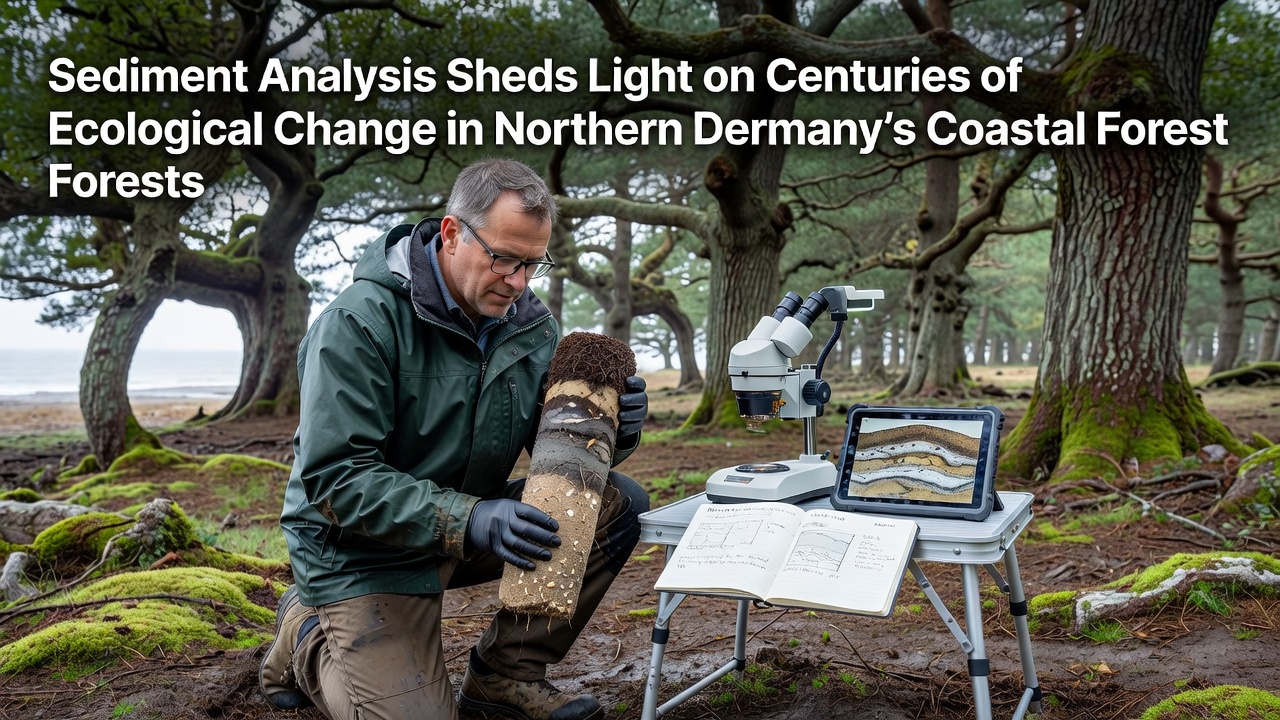
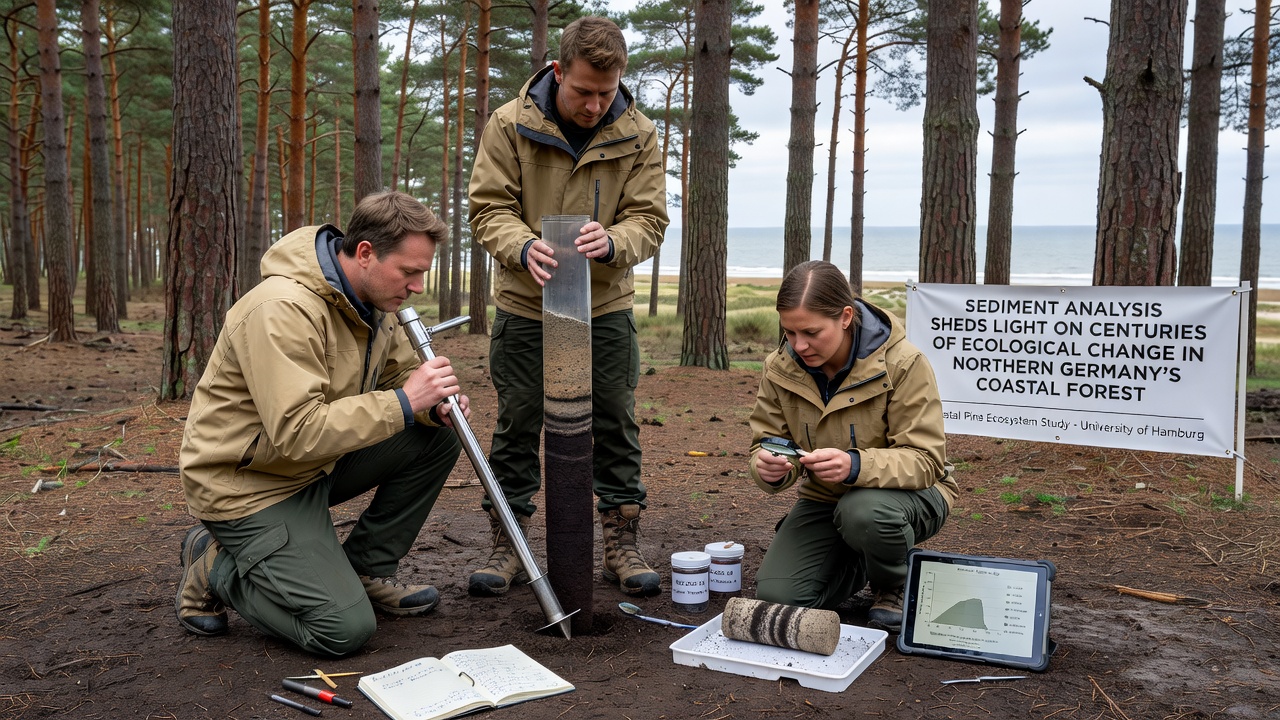
Teams collect sediment cores using specialized drilling rigs that penetrate up to several meters into wetland soils adjacent to the tree line, then transport samples to laboratories where scientists slice the material into thin sections for microscopic examination. Pollen analysis identifies plant species present at different depths while radiocarbon dating assigns ages to each layer, and stable isotope measurements track changes in water salinity that correlate with shifts in forest composition. Data from multiple sites along the Schleswig-Holstein coast show consistent markers for increased marine influence beginning around the 16th century, a period when dike construction altered natural drainage patterns.
Centuries of Recorded Ecological Shifts
Analysis of the deepest layers indicates that pre-industrial forests contained higher proportions of oak and alder before gradual replacement by species such as ash and willow that tolerate periodic flooding. Charcoal particles spike in layers dated to the 18th and 19th centuries, pointing to widespread clearing for agriculture and fuel, while more recent sections contain elevated levels of heavy metals linked to industrial emissions from the mid-20th century onward. These findings align with records from the German Federal Agency for Nature Conservation which document parallel declines in certain understory plants sensitive to soil chemistry changes.
What's interesting is how the sediment record captures both gradual trends and abrupt events, such as storm surges that deposited thick sand layers still visible in profiles from the 1870s. Researchers note that these episodic deposits coincide with documented reductions in tree ring widths, suggesting temporary setbacks in forest growth followed by recovery as sediment stabilized. In September 2026 a collaborative project between several northern universities plans to release updated core data that incorporates DNA sequencing of preserved plant material, offering finer resolution on species turnover than pollen counts alone can provide.
Linking Sediment Data to Modern Forest Conditions
Current monitoring stations placed near core extraction sites measure ongoing groundwater salinity that continues to rise in line with trends visible in the upper sediment strata. Forest inventory data collected by regional authorities show corresponding increases in dieback among less tolerant tree species, while salt-marsh plants expand inland at rates that match the most recent sediment intervals. Observers note that areas with thicker protective sediment buffers from historical deposition maintain healthier canopy cover compared to sites where erosion has removed older layers.
One study coordinated through the Helmholtz Centre Hereon examined how past sediment accumulation rates influenced present-day soil carbon storage, revealing that older depositional zones hold higher organic matter concentrations even after centuries of land management. These patterns help explain why certain woodland patches demonstrate greater resilience during recent storm seasons, as accumulated sediments provide both physical stability and nutrient retention. External records from the European Environment Agency corroborate that similar sediment-driven dynamics appear across other Baltic coastal regions though local vegetation responses vary with underlying geology.
Future Monitoring and Data Integration
Integration of sediment findings with satellite imagery and drone surveys now allows researchers to map historical change onto current forest boundaries with greater precision. Automated sensors installed at several long-term plots record real-time moisture and conductivity levels that can be compared directly against the uppermost sediment chemistry. This combined approach supports models projecting how continued sea-level trends may reshape species distributions over the coming decades, building on the centuries-long baseline established through core analysis.
Conclusion
Sediment records from Northern Germany's coastal forests supply a continuous archive of ecological responses to natural and anthropogenic drivers across multiple centuries. Laboratory results demonstrate clear linkages between past depositional events, vegetation turnover, and present-day forest health indicators. Ongoing projects scheduled for 2026 will add molecular techniques that refine these timelines, while field stations maintain the data streams needed to track whether current conditions follow or diverge from established historical trajectories.